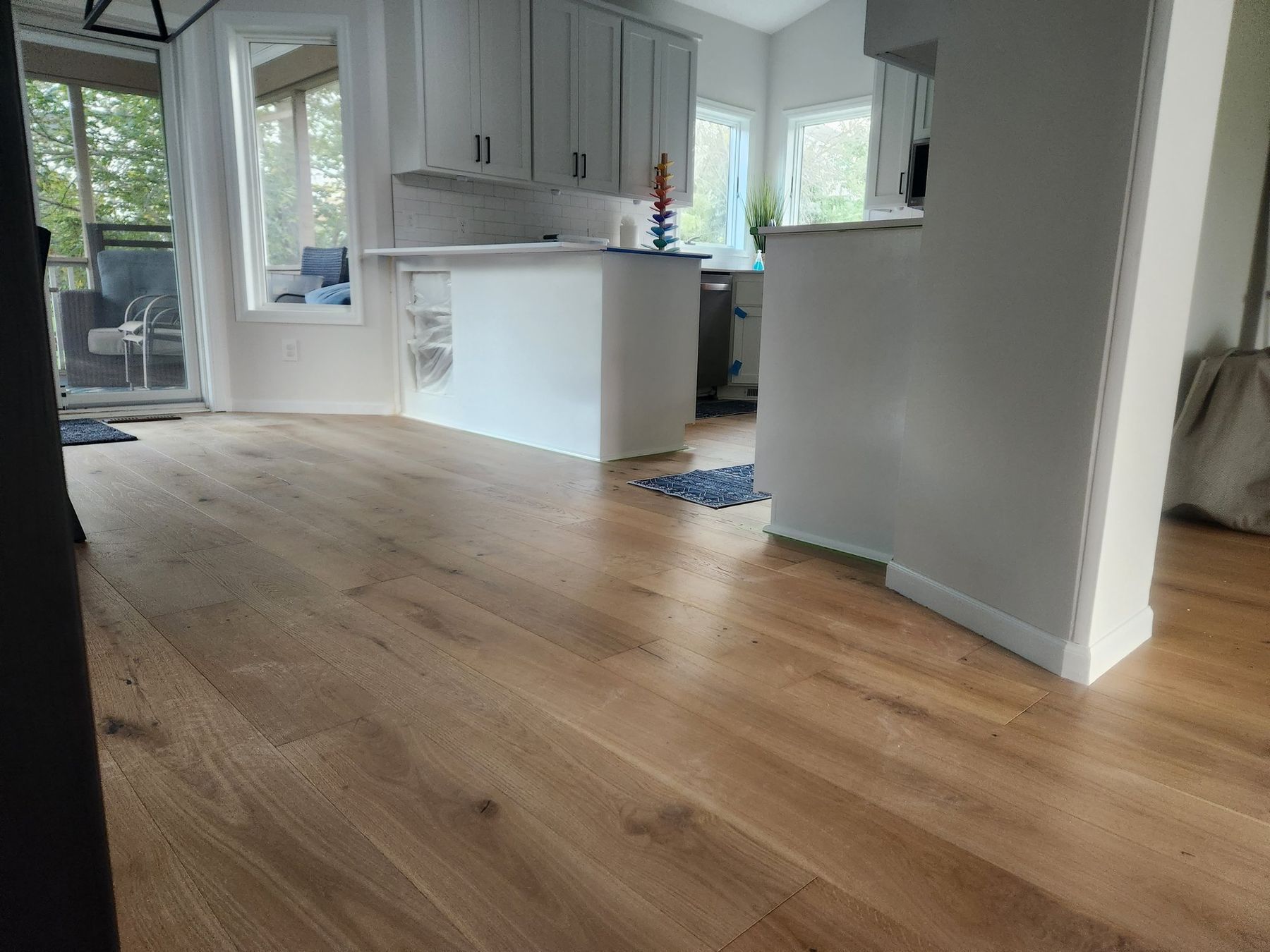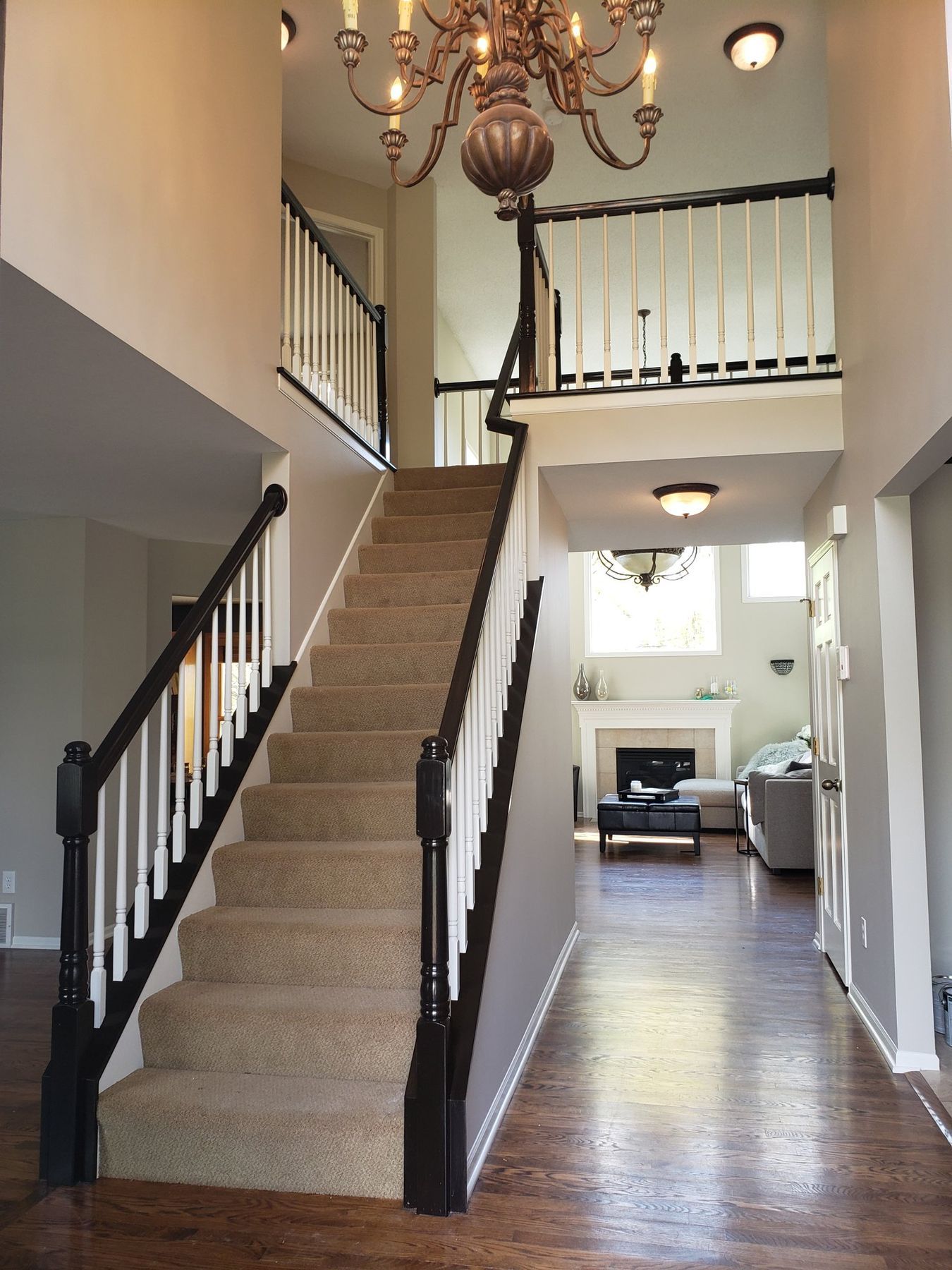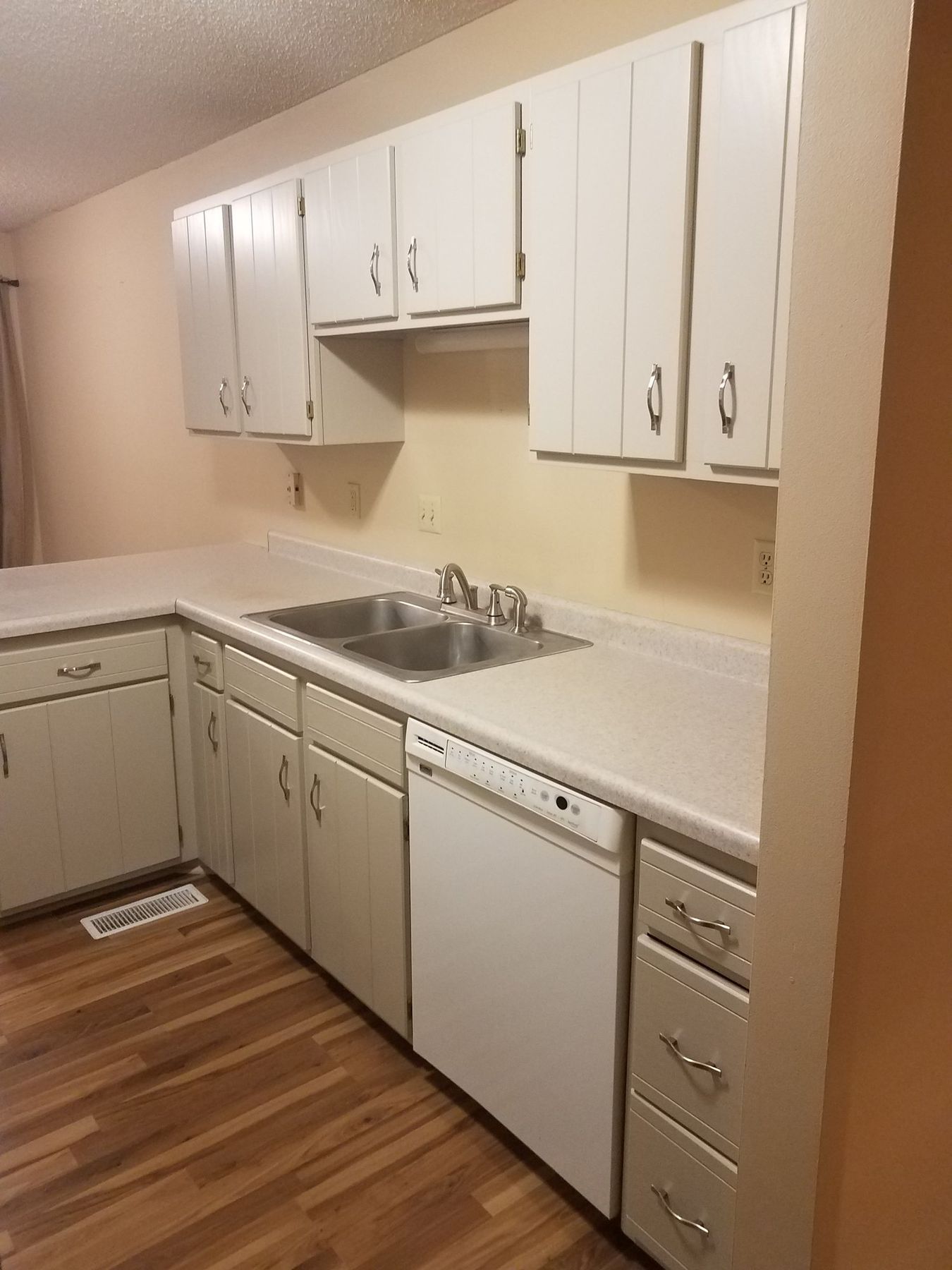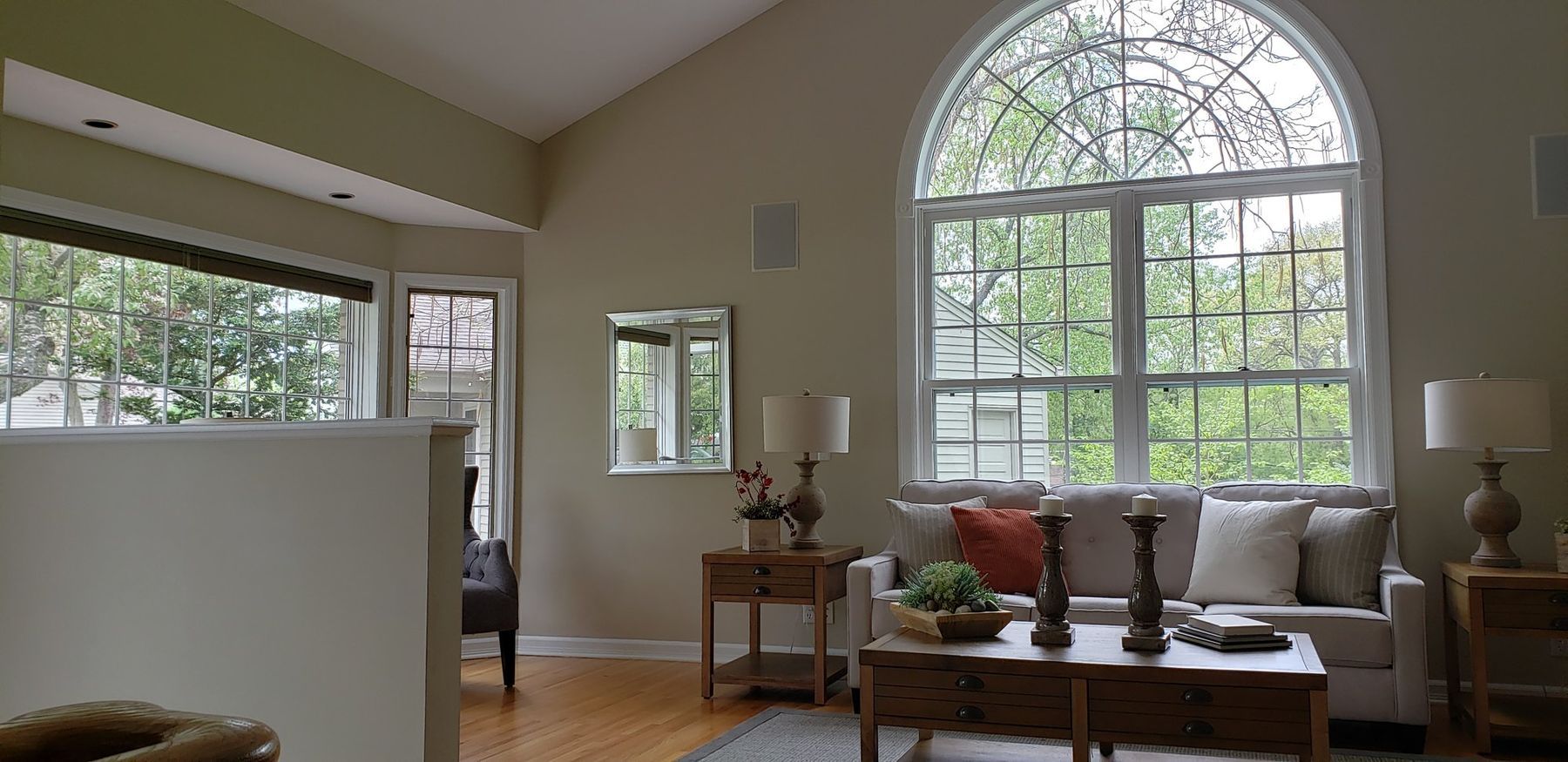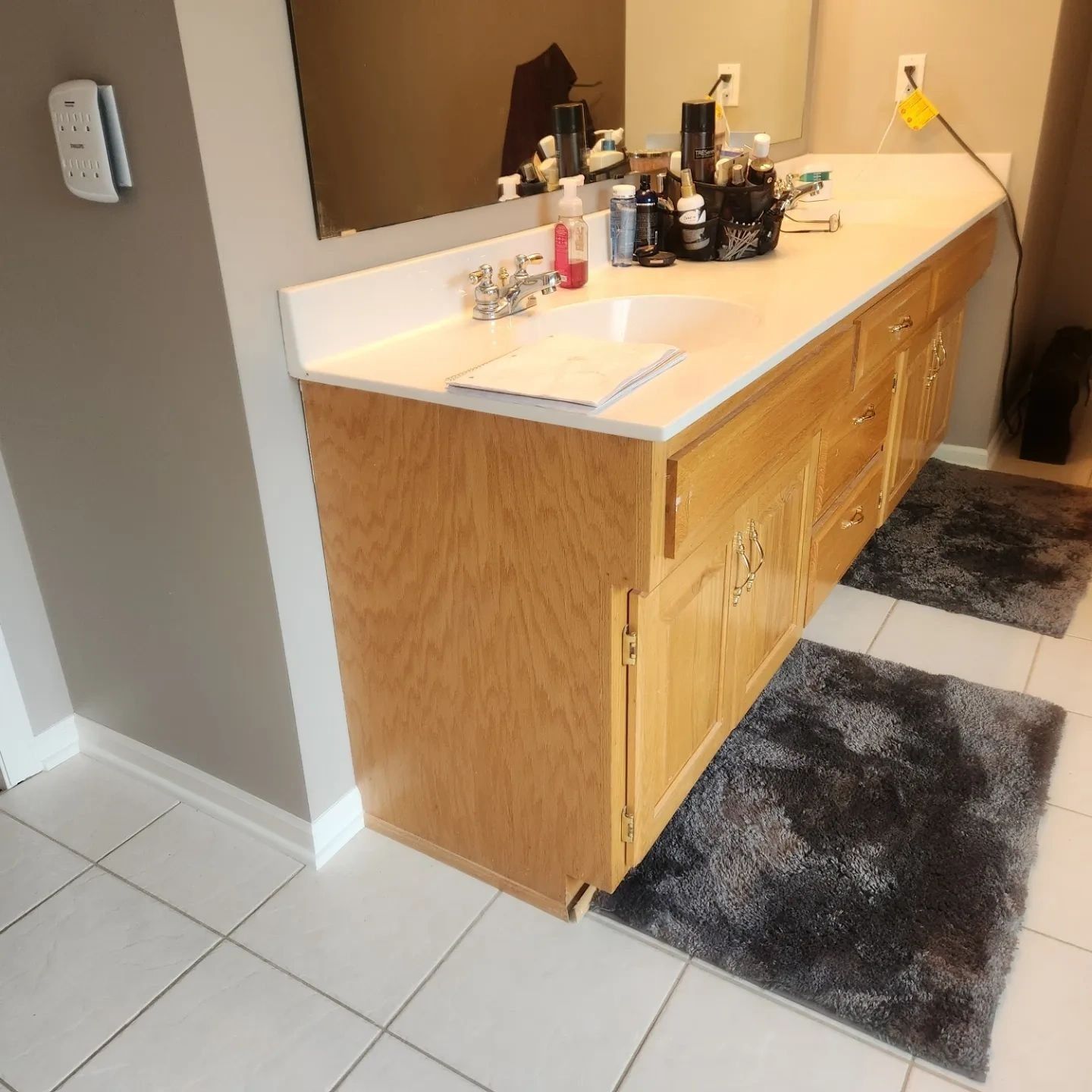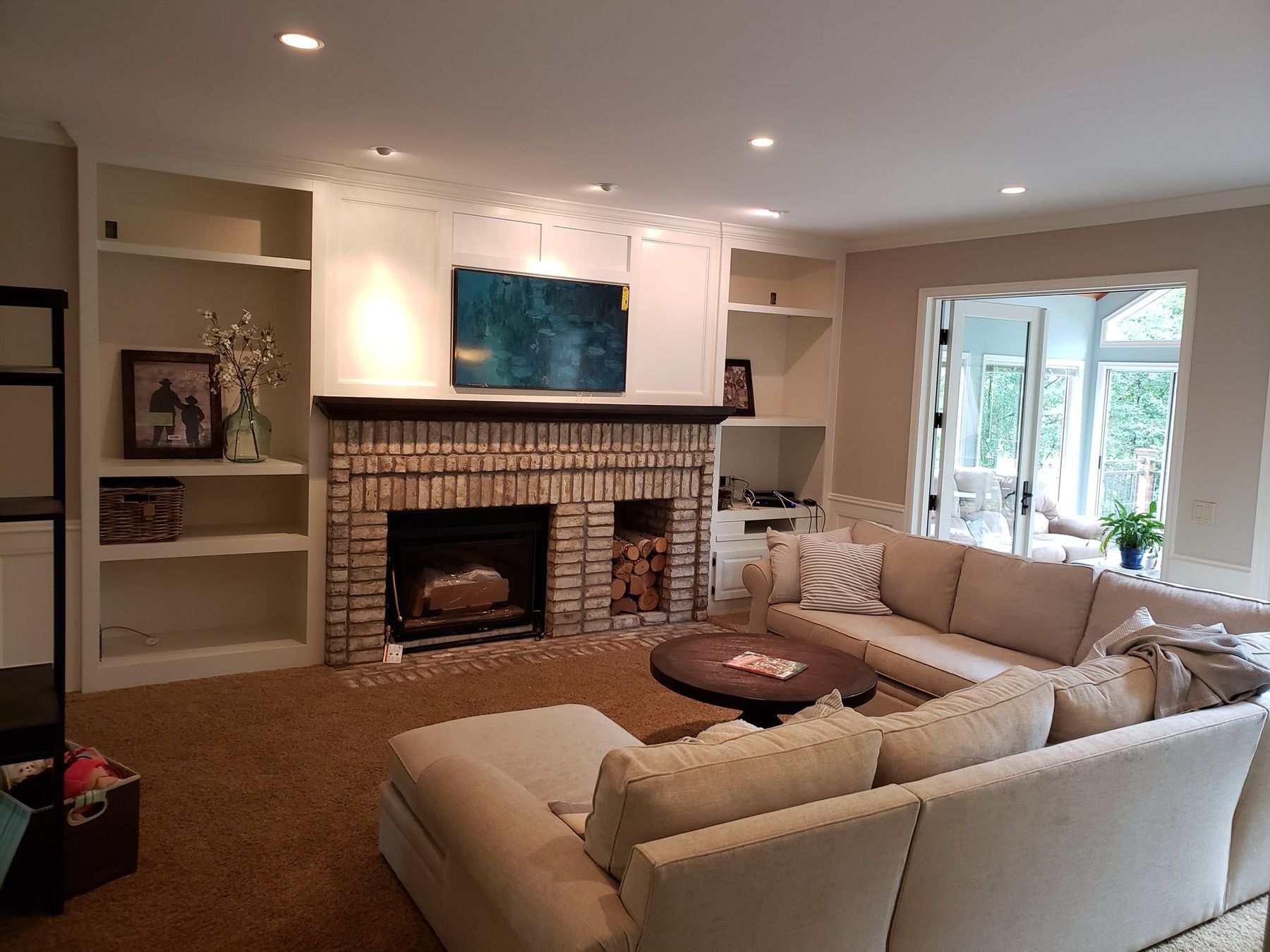
Golden oak — the honey-colored, clear-coated red oak trim installed in most Twin Cities homes built from the mid-1980s through the early 2000s — is the single most common thing homeowners in Wayzata, Minnetonka, Plymouth and Eden Prairie ask us to change. We have been converting it to painted enamel since 2015, and it is the work we are asked for most.

What a proper oak-to-paint conversion involves

Painting stained oak is not a repaint. The existing finish is a slick lacquer or varnish, the wood underneath contains tannins that bleed through water-based coatings, and the grain is open and coarse. A conversion that still looks right in five years needs four things done in order: clean, scuff-sand, shellac-prime, then enamel. When painted oak trim fails — yellow blotches around knots, paint that scratches off with a fingernail, brush marks across door panels — one of those steps was skipped.

Why we remove and spray the doors

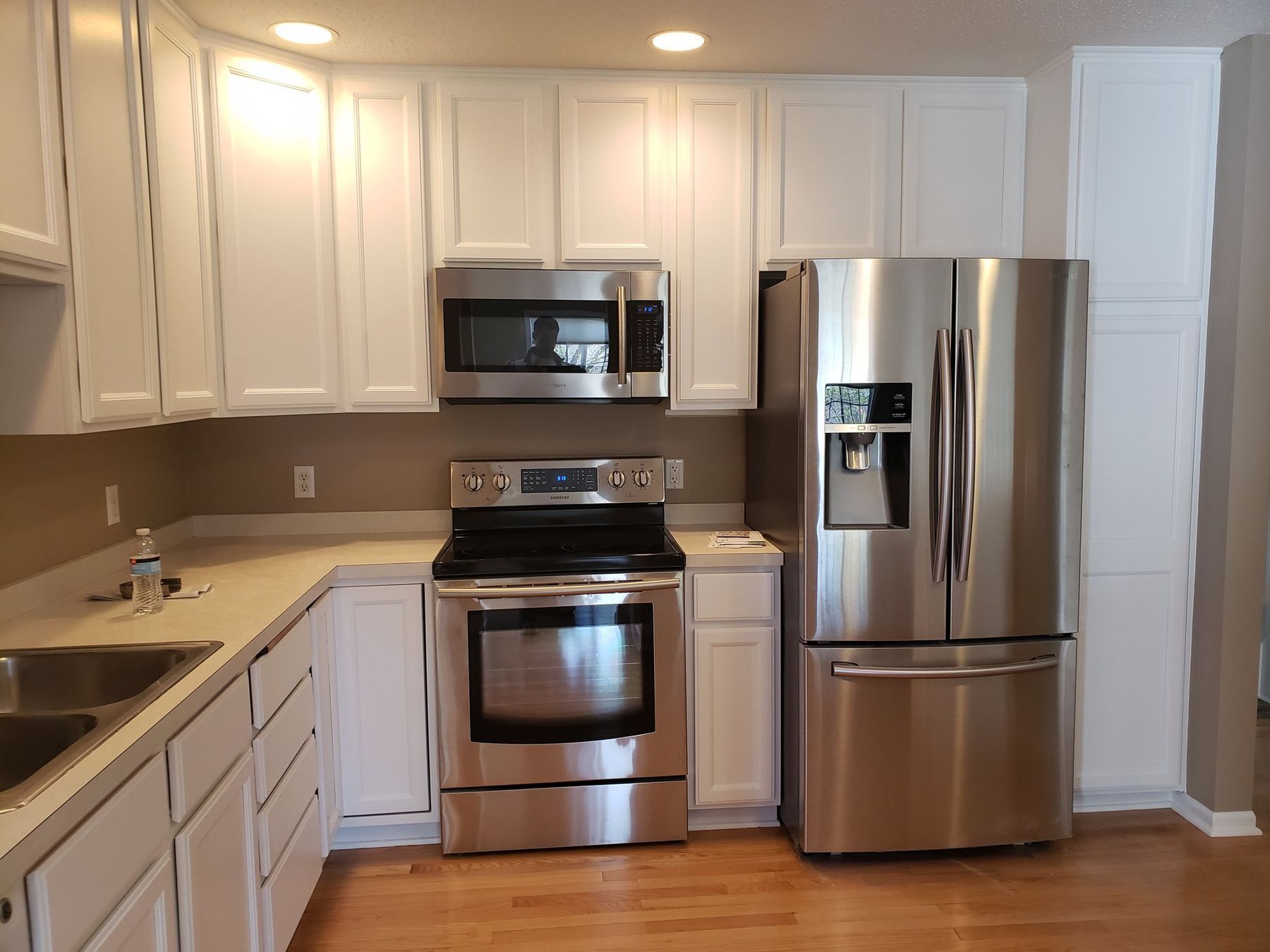
Interior doors are the largest flat surfaces in a trim job and the place where brush and roller marks are most visible. We take them off, spray them flat, let them cure, and rehang them with the original hardware. The casings, baseboard and stair parts are brushed and rolled in place with a trim enamel that levels out as it dries.

Planning the rest of the room

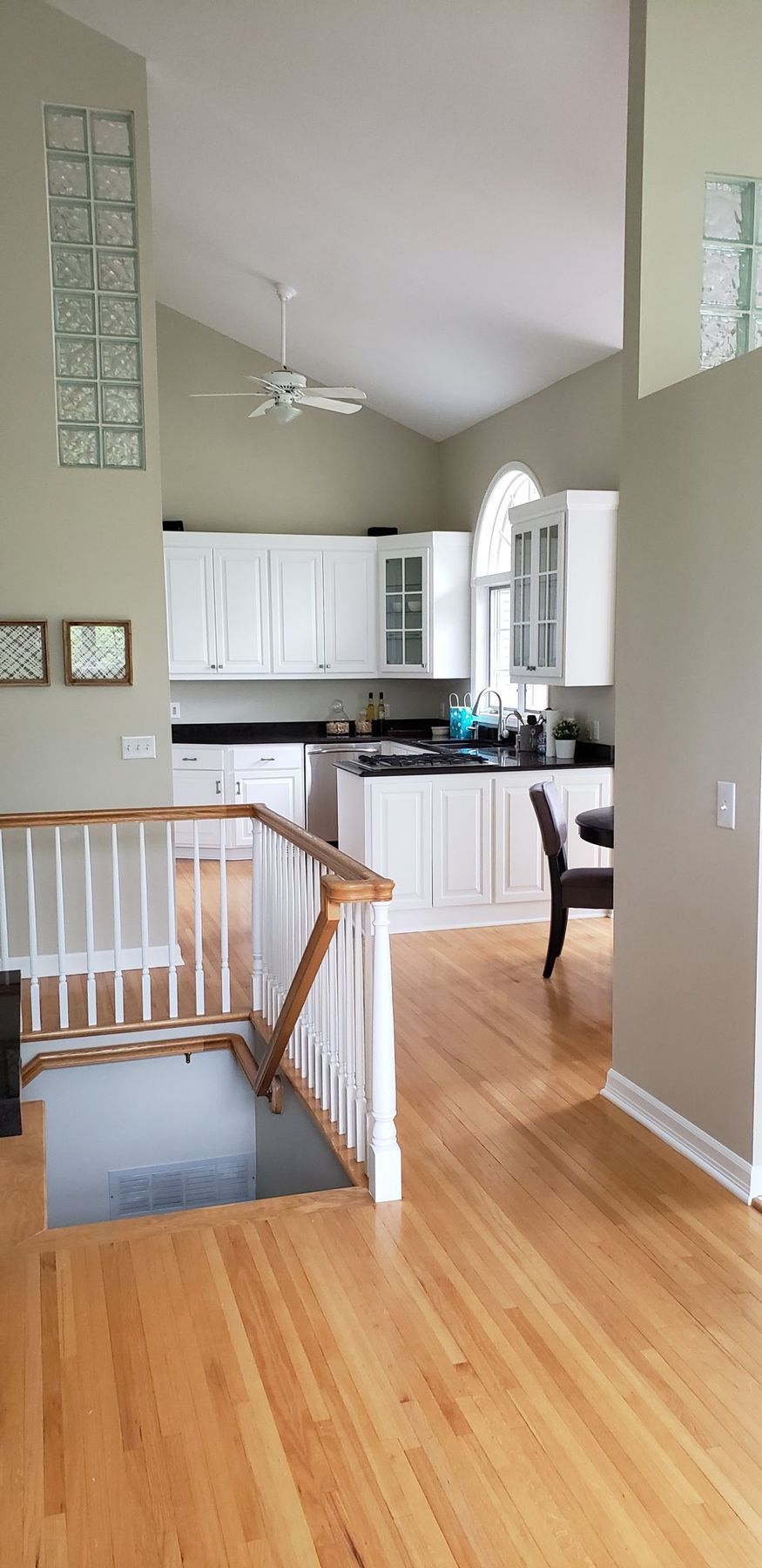
Once the oak is gone, walls often need a new color to go with white trim. Many of our golden oak projects include the walls at the same time, which avoids a second round of masking and makes the whole level read as one space. See our cost guide for painting oak trim for per-door and per-room numbers, and should you paint golden oak trim? if you are still deciding.
Our Golden Oak Trim Painting Process

  1. 01

    Protect and contain

    Floors are covered, furniture is moved and wrapped, and Zipwall dust barriers seal off the work area. Doors come off their hinges and hardware is bagged and labeled by door.

  2. 02

    Clean and scuff-sand

    Oak trim carries 25–30 years of hand oils and furniture polish. Every surface is cleaned, then scuff-sanded to break the gloss of the original lacquer so the primer can bond.

  3. 03

    Shellac prime

    Oak contains tannins that migrate through water-based paint and show up as yellow-brown blotches weeks later. A shellac-based primer seals them in. This is the step that separates a conversion that lasts from one that yellows.

  4. 04

    Fill, caulk and sand

    Nail holes are filled, every joint between trim and wall is caulked, and the primer is sanded smooth. Oak's open grain can be left visible for a painted-wood look or reduced with extra primer coats — we decide this with you before starting.

  5. 05

    Two coats of trim enamel

    Trim gets two finish coats of Sherwin-Williams Emerald Urethane trim enamel. Doors are sprayed flat in a controlled space and rehung once they can be handled.

  6. 06

    Walkthrough

    We walk every room with you under good light, mark anything that needs attention, and fix it before the job is called done.

Stained oak to painted enamel — typical Twin Cities prices (2026)

Stained-to-painted costs more than repainting already-painted trim because of the sanding, shellac priming and extra coats.

ItemTypical range
Interior door, both sides + edges$370 – $425
Door frame / casing (one side)$200 – $230
Standard window casing$250 – $350
Double-hung window with sashes$400 – $500
Baseboard or crown, per room$250 – $350
Main level of a 1990s home (typical)*$9,000 – $16,000

Last updated September 2026. Interior and cabinet ranges are Paintcrafters’ own: each starts at the lowest price we can do that scope for. Other ranges are compiled from published 2024–2026 price guides of Twin Cities painting contractors. They are planning numbers, not quotes — every Paintcrafters price comes from an on-site walkthrough. *Paintcrafters planning estimate; no local published figure.

Golden Oak Trim Painting: Common Questions

Can you paint golden oak trim white?

Yes. Golden oak trim paints very well as long as it is cleaned, scuff-sanded and sealed with a shellac-based primer before the enamel goes on. Skipping the shellac is the most common reason painted oak turns yellow or blotchy within a few months.

Why does oak need a shellac primer?

Oak contains water-soluble tannins. A water-based primer or paint draws them to the surface, where they appear as tan or yellow stains. Shellac is not water-based, so it seals the tannins in and gives the enamel a stable base.

Will the oak grain show through the paint?

Some grain texture will usually show under the paint, which many homeowners like. If you want a smoother, more furniture-like finish, extra primer coats and sanding reduce the grain. It adds labor, so we price it as an option.

How long does it take to paint the trim in a typical 1990s home?

A main level — foyer, kitchen, dining and living room with 8–12 doors — usually takes one to two weeks. A whole house with 25 or more doors is typically three to four weeks. We schedule room by room so you keep using your home.

Can you leave the handrail stained and paint everything else?

Yes, and it is one of the most popular combinations. A stained oak handrail over white-painted spindles, skirt boards and risers keeps some warmth and holds up to daily hand contact.

How long does painted trim take to cure?

The enamel is dry to the touch within hours and doors are rehung within a day or two, but the finish keeps hardening for several weeks. Avoid scrubbing, taping or leaning furniture against it for the first two to three weeks.

Ready to Talk About Your Golden Oak Trim Painting Project?

Tell us what you have in mind. We'll walk it with you and send a written estimate — usually within a few days.

Call Free Estimate