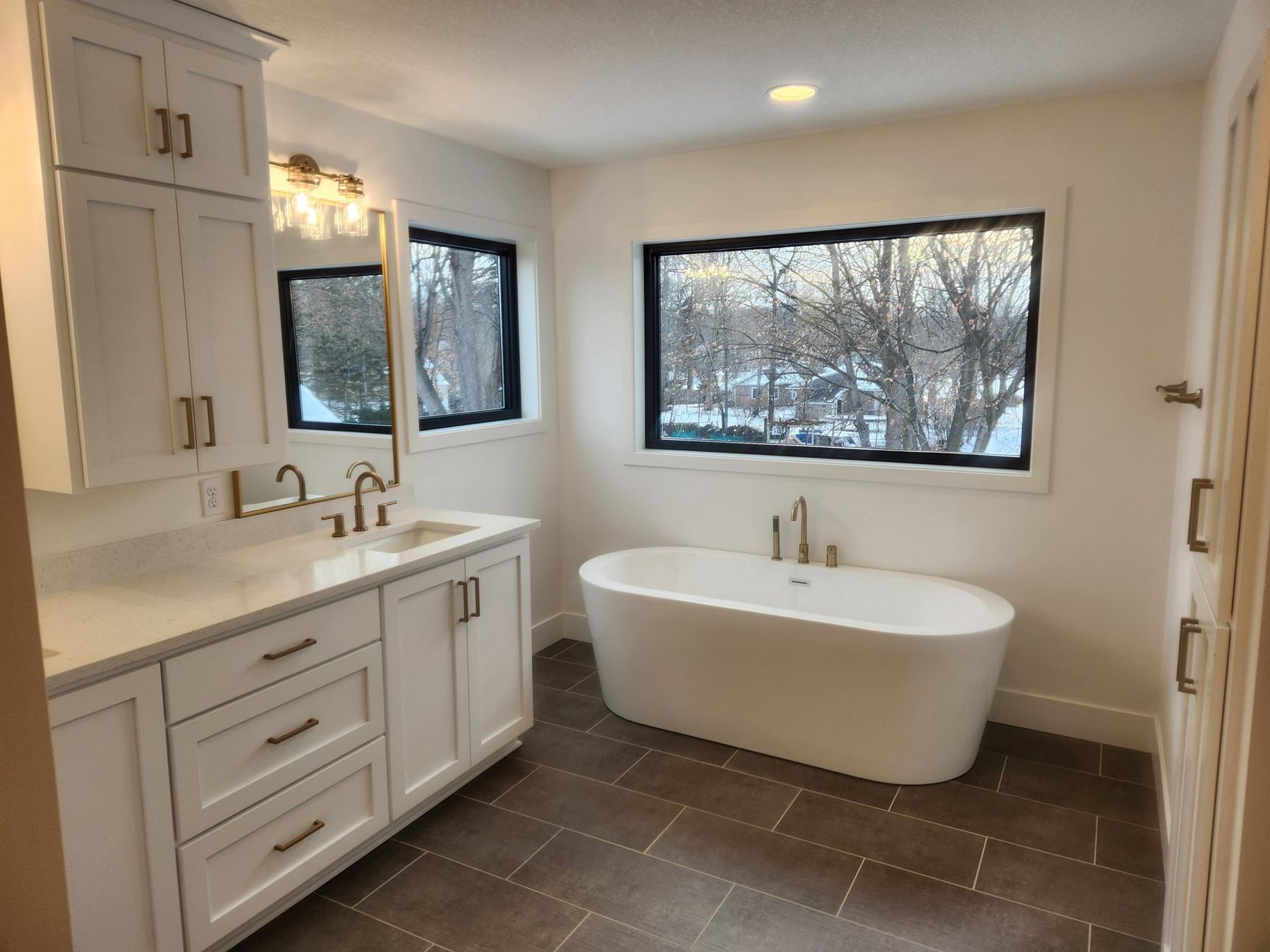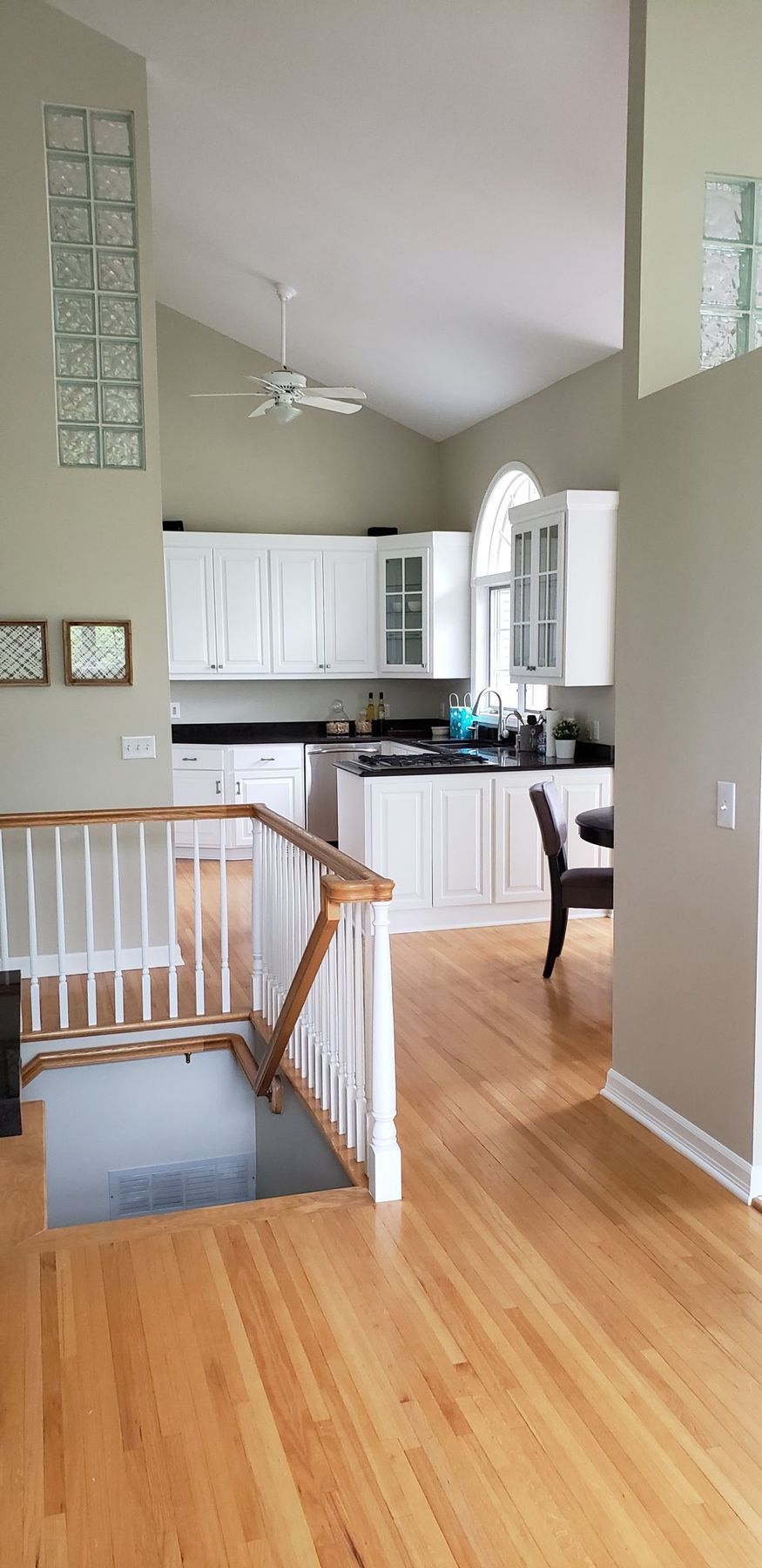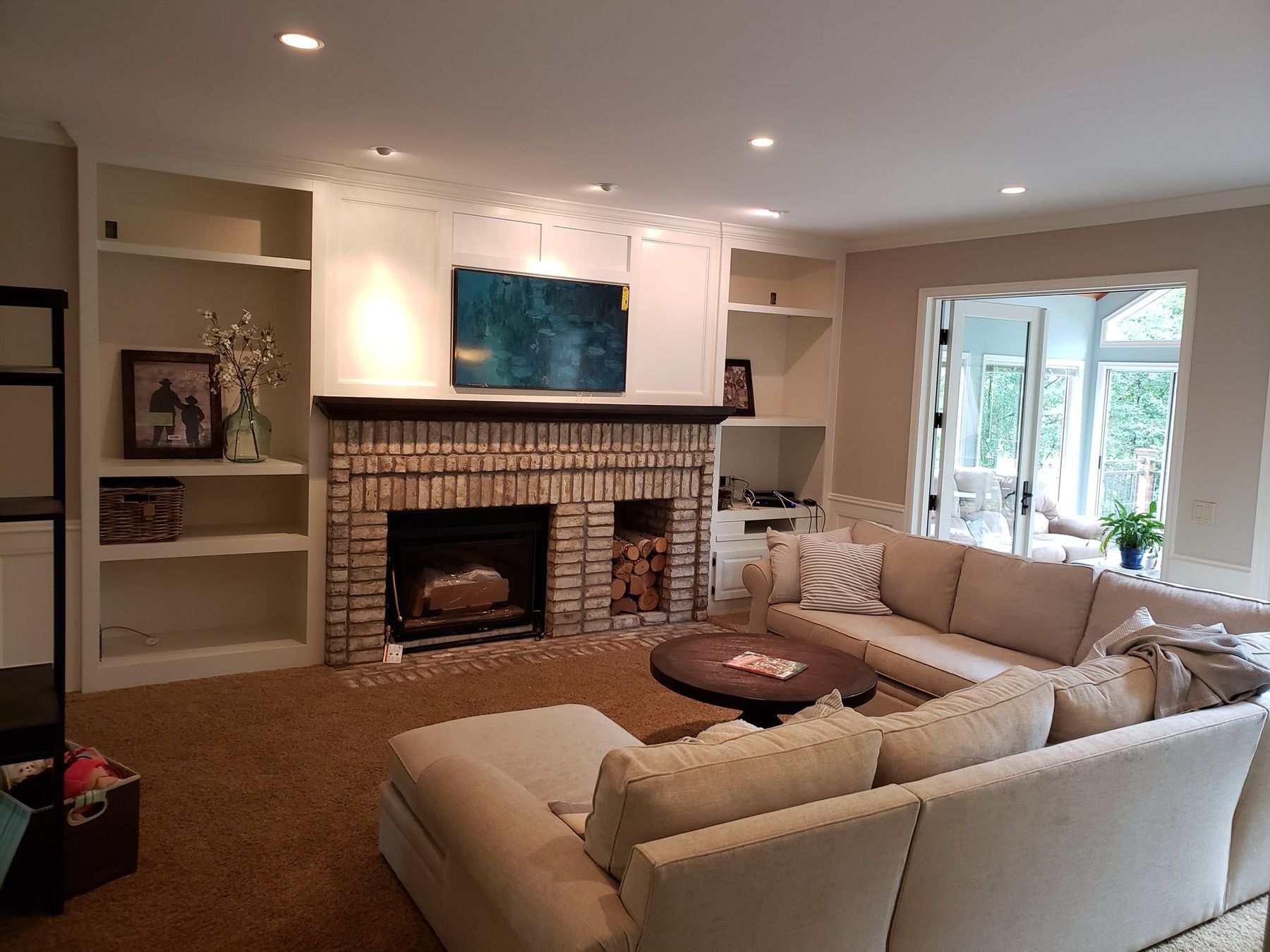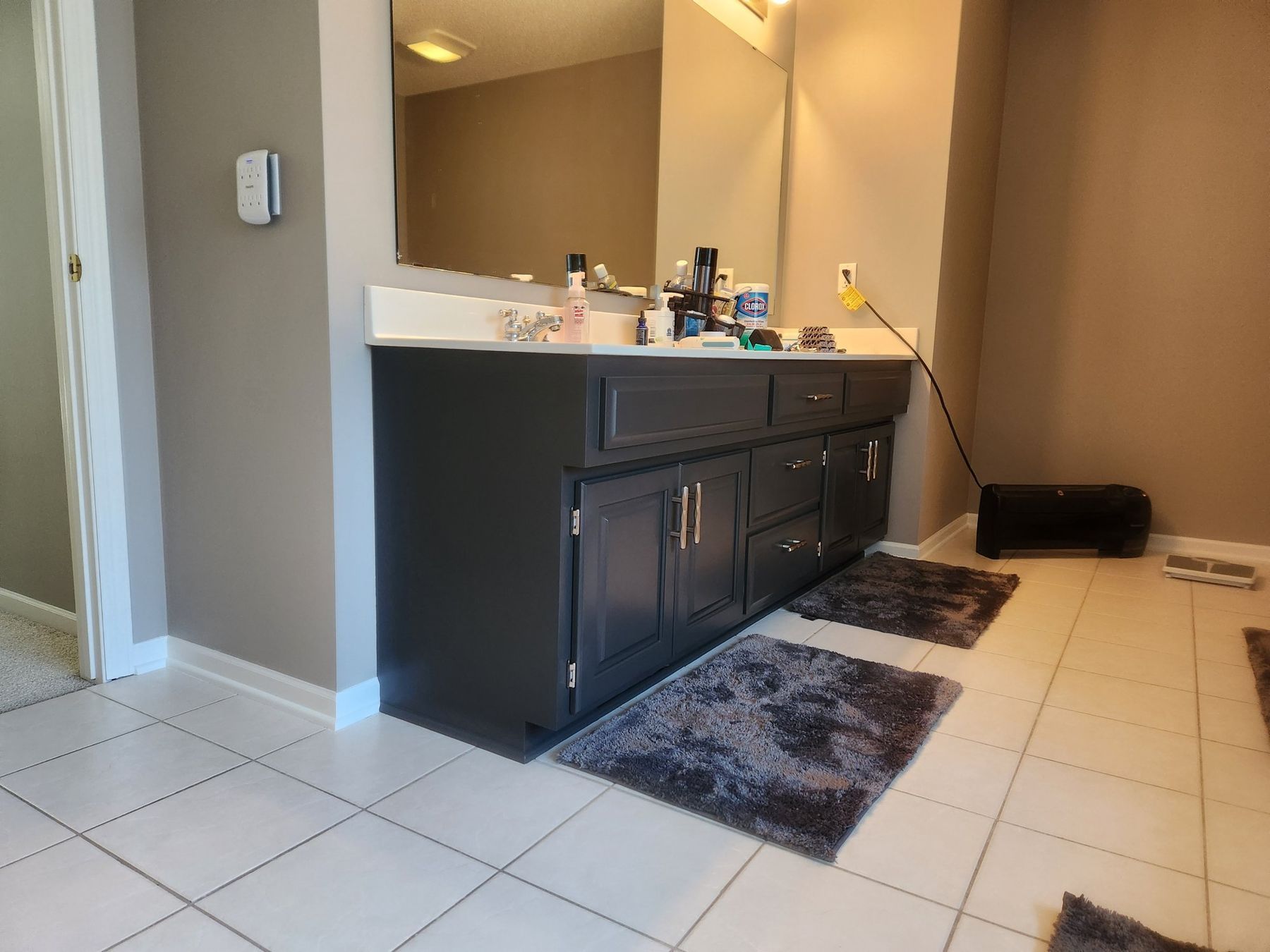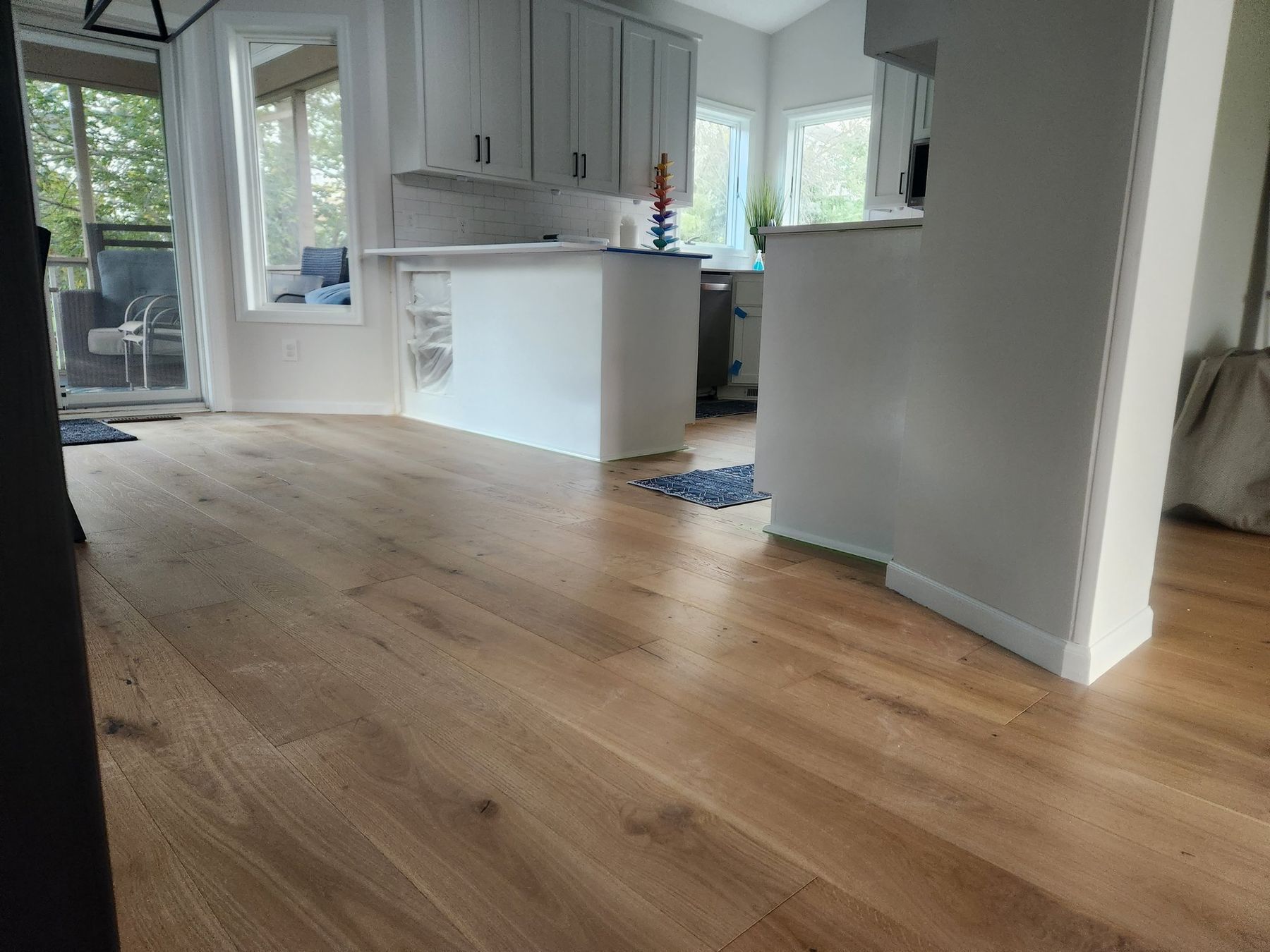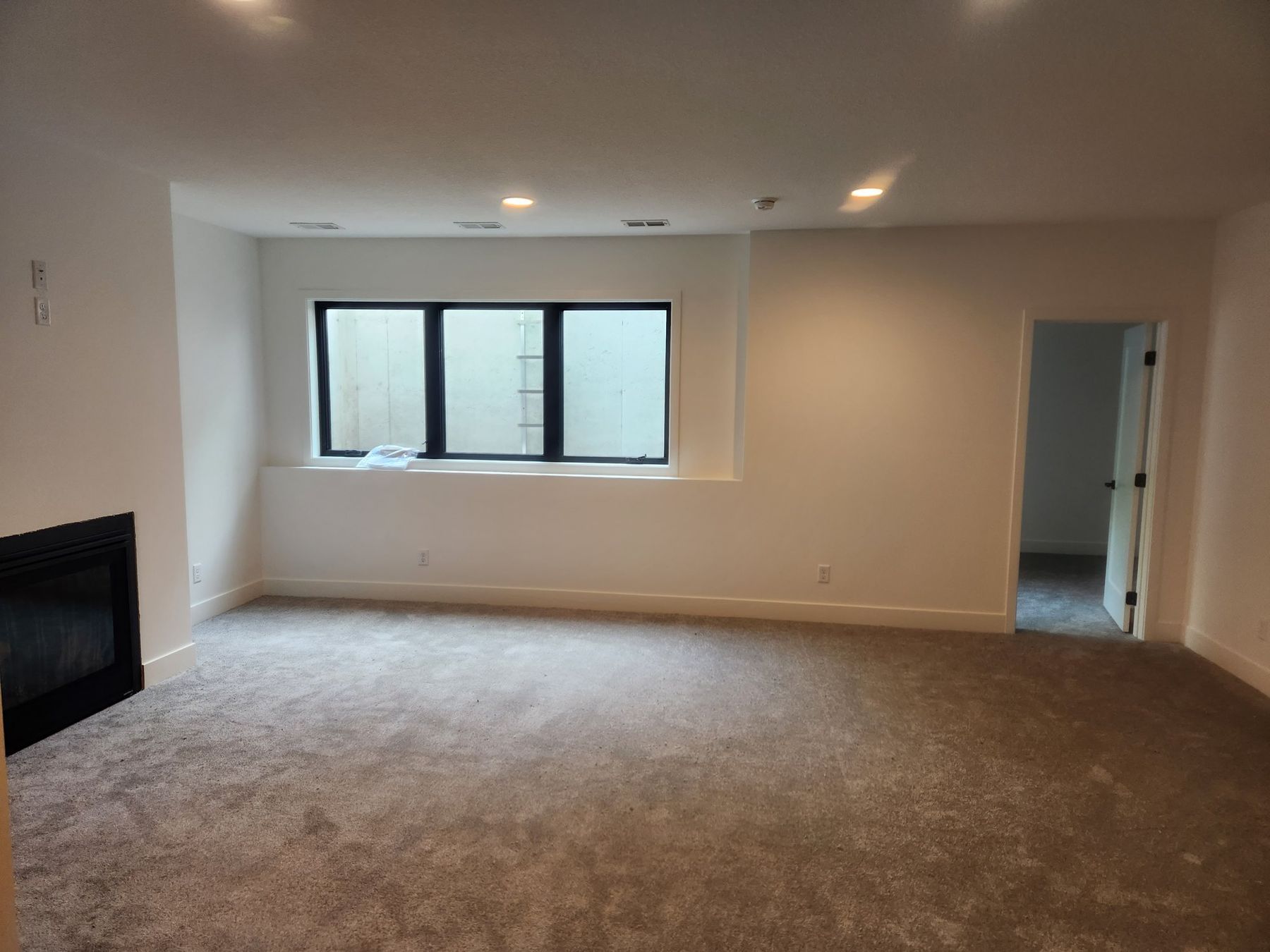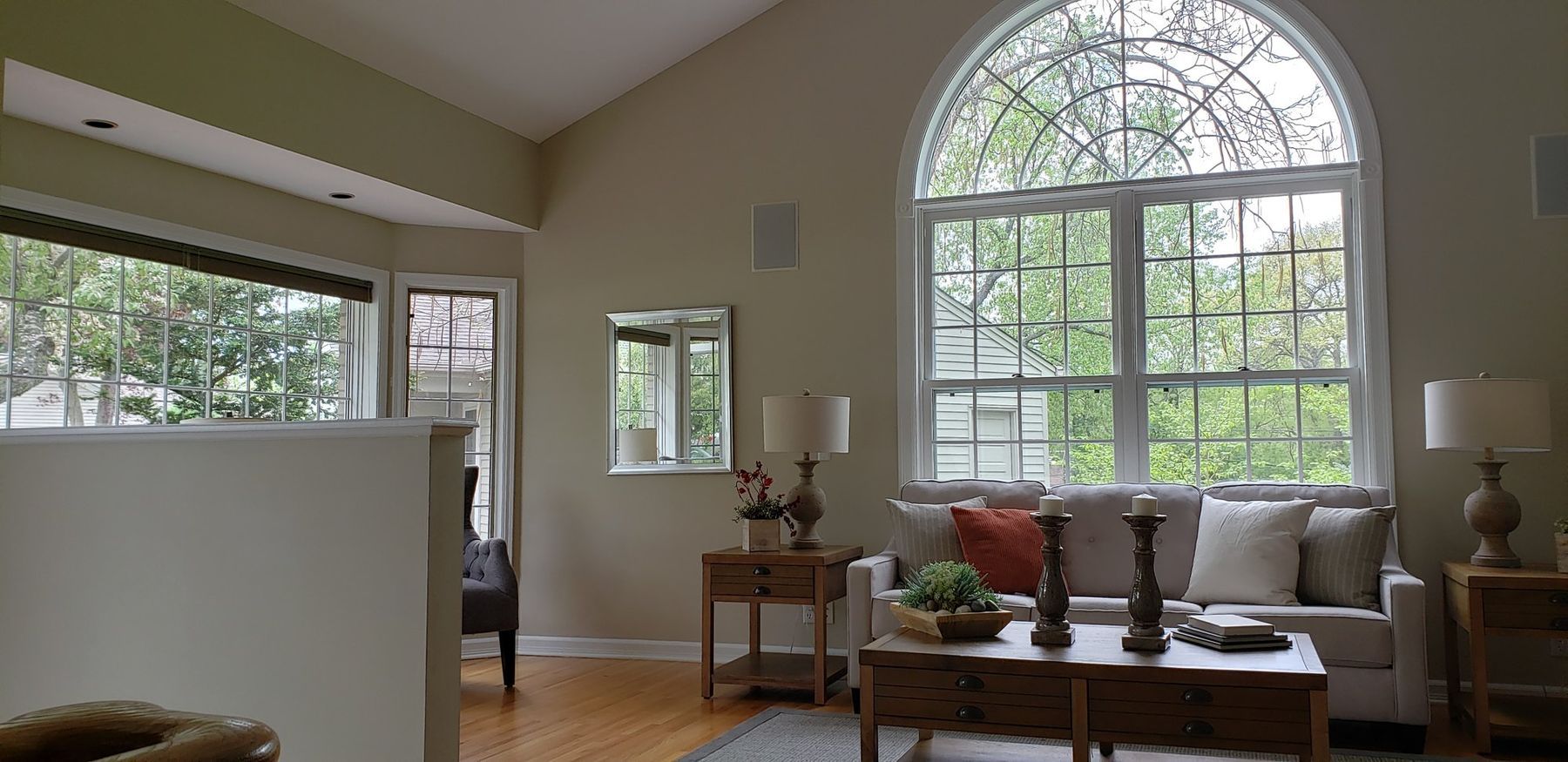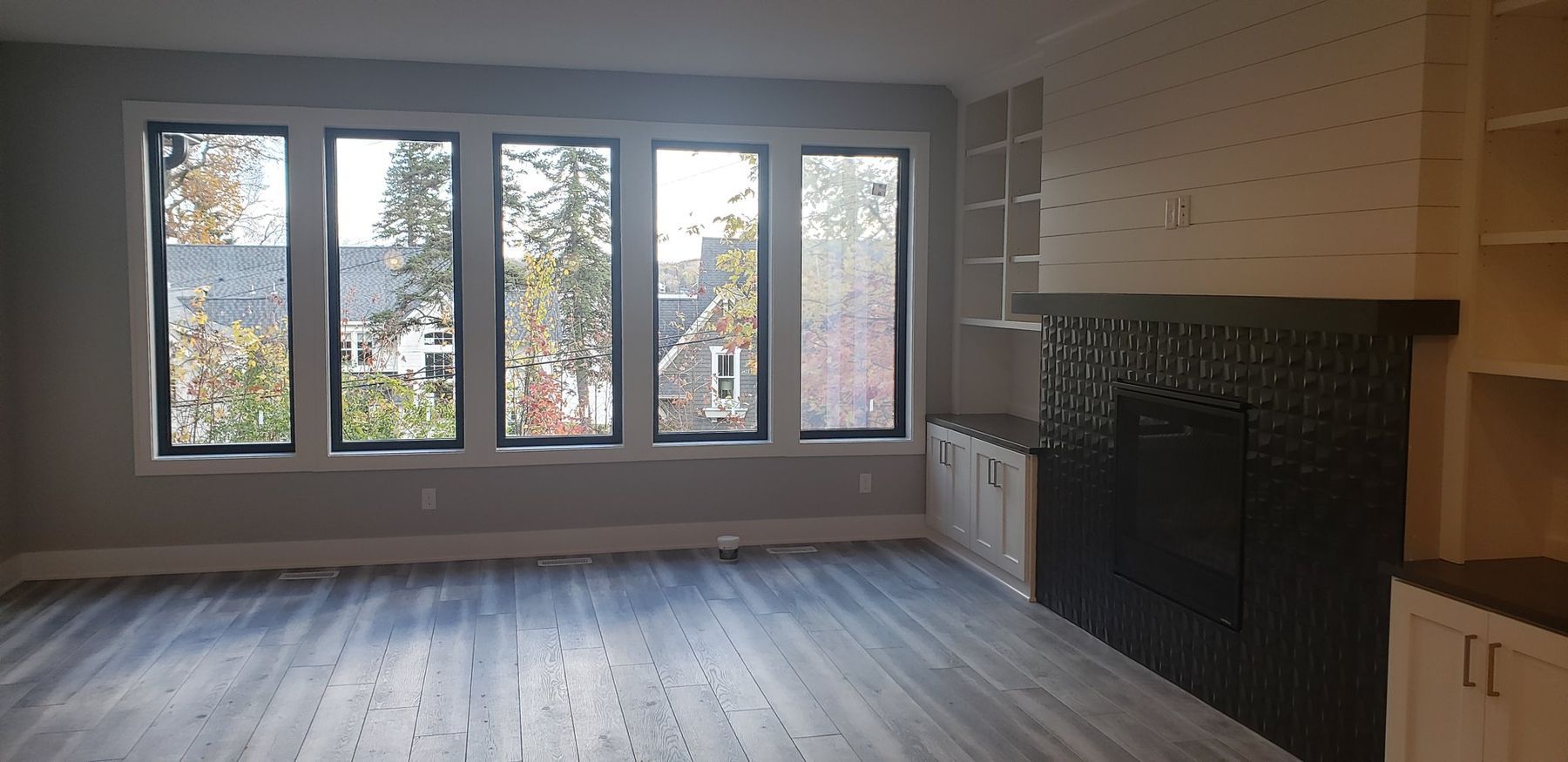
A good interior paint job is mostly preparation. Paint does not hide dents, nail pops, cracked caulk or water stains; it shows them. Before we open a can we light-check every wall, patch and sand what we find, prime anything that could bleed through, and caulk gaps at the trim. Then we paint.
Clean, straight lines and even coverage
We cut ceiling lines and trim lines by hand and roll walls in two full coats. On trim and doors we use a separate enamel designed to level out and resist scuffs. The result we aim for is a room where nothing draws your eye: no flashing (dull and shiny patches), no holidays (missed spots), no drips.
Working in occupied homes
Almost every project we do is in a home that people are living in. We keep a tidy work area, cover everything we are not painting, and set up Zipwall dust barriers when we sand or spray. At the end of each day the rooms we are working in are usable.
Color help
Choosing color is the hardest part for many homeowners. We can bring large samples, point you to colors that have worked in similar homes, and paint test patches on your walls before you commit.
For planning numbers, see our interior painting cost guide and how to prepare for interior painters.