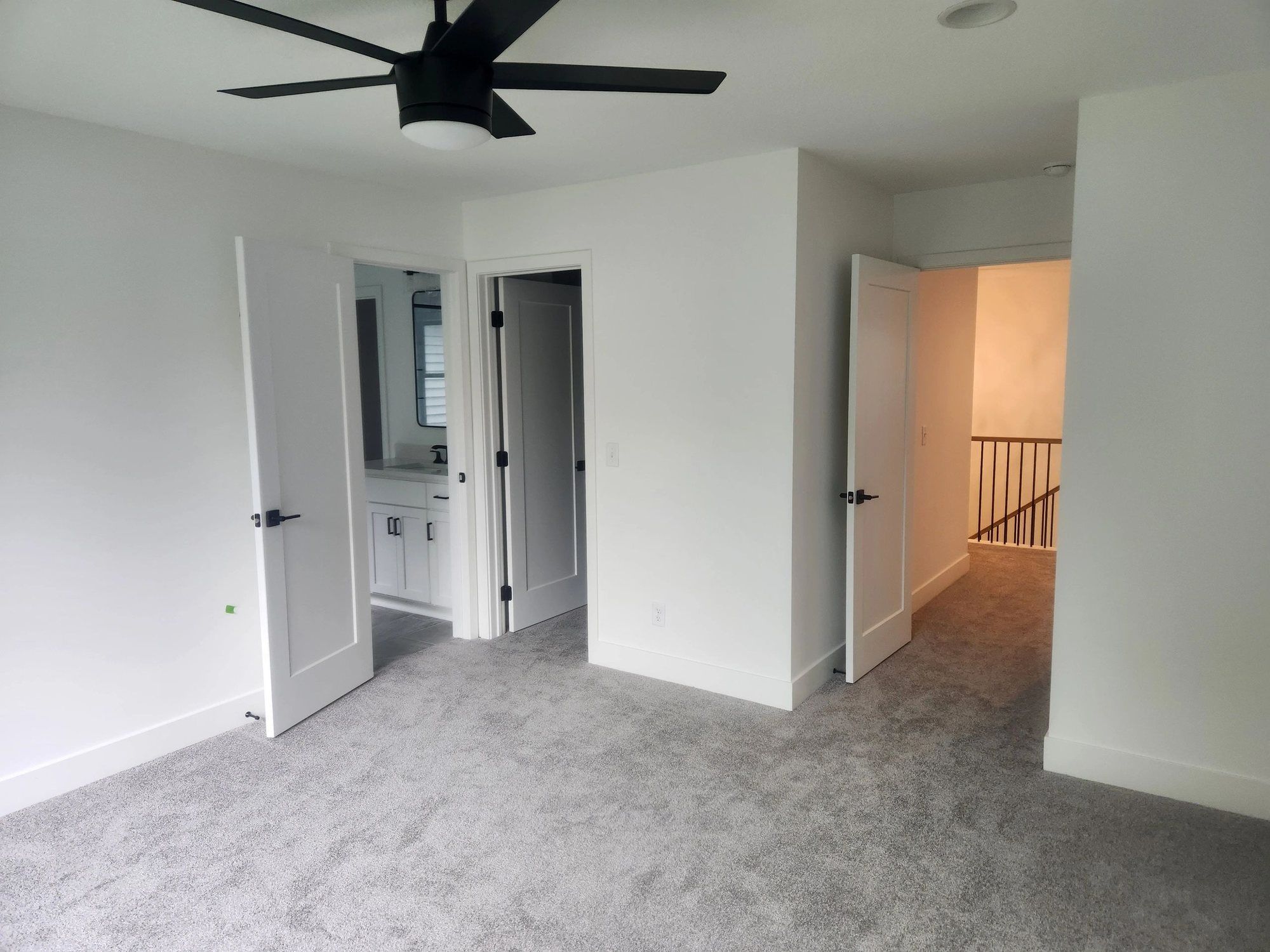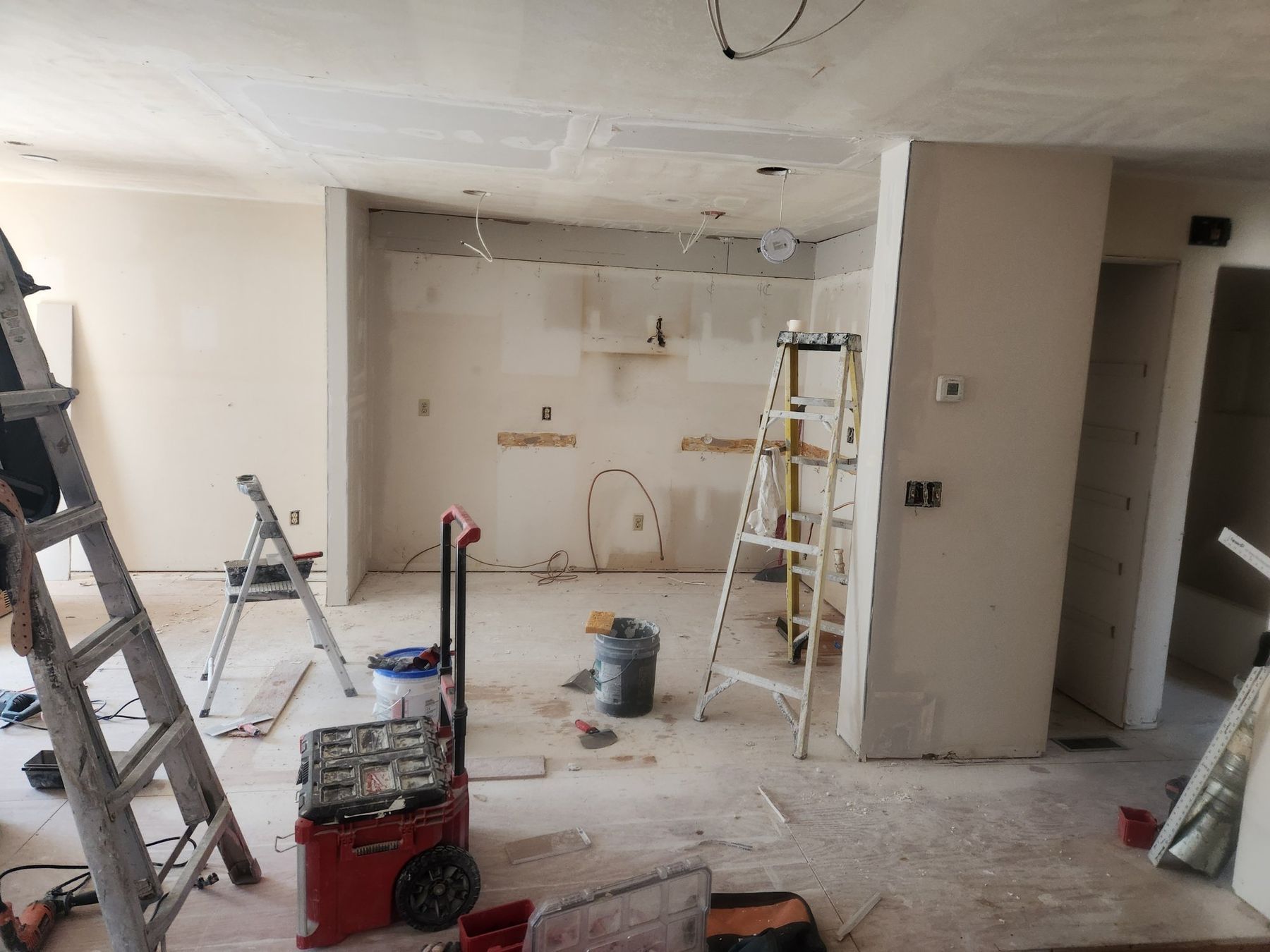
Popcorn ceilings — the spray-on acoustic texture common in Twin Cities homes built from the 1960s through the 1980s — make rooms feel dated and dark, collect dust, and are hard to repaint. Removing them is one of the most requested projects we do, and one of the most satisfying: the room looks taller and brighter the day the paint goes on.
Test before you scrape
Some older popcorn textures contain asbestos. If your home was built or remodeled before the mid-1980s, we ask for a lab test before we start. Most results come back negative within a few days. If the test is positive, the ceiling needs a licensed abatement contractor, and we can paint after they finish.
Wet scraping, not sanding
We seal the room, mist the texture in small sections, and scrape it off while it is soft. Dry-scraping or sanding popcorn creates far more airborne dust and tears the drywall paper. After scraping we skim the ceiling where needed, sand it smooth, prime and paint.
Pair it with the walls
Once the ceiling is done, the walls usually need attention too. Painting walls and ceilings together avoids masking the room twice. See the popcorn ceiling removal cost guide for planning numbers.